Alumni
Alumni Hall of Fame
The achievements of our alumni are of special significance to us because they reflect not only on their accomplishments but also on this Department. We want to keep in touch with you and have provided a contact page for your convenience.
The Alumni Hall of Fame are alumni who have been identified by their peers and by the faculty of the Department as having demonstrated exceptional accomplishments in their chosen career.
Richard T. Arnold
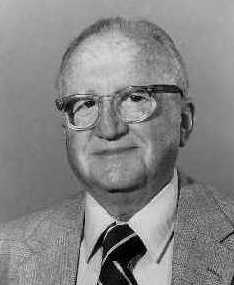 Richard T. Arnold was born in Indianapolis, Indiana, but came to school in Southern Illinois, where he lived as a guest in the old Thompson house (now a depression in the ground in Thompson's Woods just behind the south wing of the Student Center). He received his B.Ed. degree from Southern Illinois Normal University in 1934 and went on to the University of Illinois for his M.S. and Ph.D. degrees in 1935 and 1937. Then he started an academic and industrial career which eventually ended at Southern Illinois University at Carbondale. Along the way, he moved through the ranks at the University of Minnesota from Instructor to Full Professor, 1937-1946. He was Chairman of that Department of Chemistry, 1946-1955, (with a brief stint as Scientific Attache to the U.S. Embassy in Bonn, Germany from 1952-1953) until he became Program Administrator of the Alfred P. Sloan Foundation, 1955-1960. Next he joined Mead Johnson and Co. (1960-1970) as their first Director of Research, but soon moved up the corporate ladder, first as Vice President for Research and Development, then as President of the Research Center, and finally as Vice President and Chairman of the Scientific Advisory Board. Returning to SIUC, Dr. Arnold served as a Professor in the Department of Chemistry and Biochemistry (1970-1982) and as Chairman from 1970 to 1975. During this last period he was also Chairman of the Board of Organic Synthesis, Inc. The year following his retirement into Emeritus Professor status, he was honored with a Visiting Professorship at Northwestern University. Among Professor Arnold's many honors are the American Chemical Society's Award in Pure Chemistry in 1949, and Honorary D.Sc. Degrees from Northwestern University and Southern Illinois University. Professor Arnold was active in civic affairs, university and departmental committees, and published over 100 scientific papers.
Fred Banes
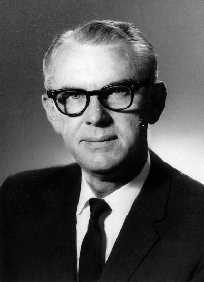 Fred Banes was born in Saline County, Illinois to tenant farmers who moved to Christopher where Fred graduated from High School during the depression in 1934. After working in the Civilian Conservation Corps in Illinois and Wisconsin during 1935 and 1936 he entered Southern Illinois Normal University and he graduated Cum Laude with a B.S. in Chemistry in 1940. He earned his Ph.D. in Chemistry from the University of Illinois in 1943, and later in his career (1958) engaged in Post Doctoral studies at the Massachusetts Institute of Technology Sloan School of Business Management. Dr. Banes joined the Esso (now Exxon) Research and Engineering Co. (ER&E) in 1943 where he held the titles Research Chemist, Section Head, Assistant Director, and in 1957 was appointed Associate Director of the Chemical Division. During that period he conducted research projects related to plastics, elastomers, industrial chemicals, additives, fibers, and new organic chemicals. In 1960, Dr. Banes moved to Enjay Chemical Company as part of the corporate planning staff. He was involved in development and long range planning programs for Enjay and coordination of research activities carried out by ER&E. Dr. Banes’ extensive service included chairman of the Board of Higher Education for the American Baptist Convention, Vice President and Board member of the Westfield YMCA, Chairman of the YMCA World Services Committee, Board of Directors of the Chemists' Club of New York, Economic Development Council NYC, Director of Planning for NYC Inner-City High Schools, and Vice Chancellor of the NYC Board of Education. He was inducted into Phi Beta Kappa, Kappa Phi Kappa, Delta Rho, Chemeka, Chi Delta Chi, and Alpha Chi Sigma. He had seventy-five patents and was a member of the American Chemical Society, the New York Academy of Science, the Society of Chemical Industry, and the National Society for Corporate Planning. In 1968 he was awarded the Distinguished Alumni Award by Southern Illinois University.
Fred Basolo
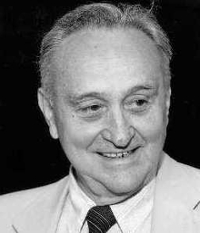 Fred Basolo was born in Coello, Illinois. He earned his B.Ed. degree from Southern Illinois Normal University in 1940 and then his M.S and Ph.D. degrees from the University of Illinois in 1942 and 1943. After a three year foray into industry at Rohm & Hass Chemical Co., he became an Instructor in the Department of Chemistry at Northwestern University and rapidly rose through the ranks to Full Professor. He served that department as Chairman from 1969-1972. In 1980 he was awarded the title, Morrison Professor of Chemistry. Among Professor Basolo's many honors are the American Chemical Society's Awards for Research in Inorganic Chemistry and for Distinguished Service in Inorganic Chemistry; The Bailar Medal Award; The Dwyer Medal Award; Election to the National Academy of Science; The James Flack Norris Award for Outstanding Achievement in the Teaching of Chemistry; President of the American Chemical Society; Member of the Board of Directors of the American Chemical Society; Honorary D.Sc. Degree from Southern Illinois Univerisity; Laurea Honoris Causa from the University of Turin; the Italian Chemical Society Award for Research in Inorganic Chemistry; the IX Century Medal of Bologna University; the Harry and Carol Mosher Award; the Padova University Medal; Medals from Pohang University of Science and Technology (POSTECH), the Korean Institute of Science and Technology (KIST), and the Inorganic Division of the South Korean Chemical Society; the Chinese Chemical Society Medal, the American Chemical Society's George C. Pimentel Award in Chemical Education; the American Institute of Chemists' Chemical Pioneer Award and Gold Medal Award; the Humboldt Senior U.S. Scientist Award, and the 1996 Josiah Willard Gibbs Medal. Professor Basolo has served on many editorial boards, has held many offices, and has served on many committees. He has been honored with 19 name lectureships, presented numerous plenary lectures, and has authored more then 375 scientific publications and co-authored several books.
Daryle H. Busch
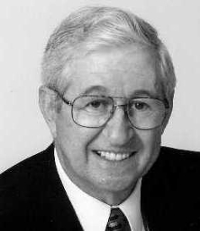 Daryle Busch was born in Carterville, Illinois. He earned his B.A. degree from Southern Illinois University in 1951 and his M.S. and Ph.D. degrees from the University of Illinois in 1952 and 1954. Then he joined the Department of Chemistry at The Ohio State University rising through the ranks to Full Professor in 1963. In 1987 that university awarded him its Presidential Professorship, and in 1988 he retired with the title Presidential Professor Emeritus. However, he immediately became associated with the University of Kansas, where he became the Roy A. Roberts Distinguished Professor of Chemistry in 1988. Professor Busch has engaged in four visiting professorships: University of Florida, 1960; University of California, Riverside, 1968; University of California, Los Angeles, 1975; and Japan Society for the Promotion of Science, Kyushu University, Fukuoka, Japan, 1978. He has served on nine editorial boards and has held numerous offices in professional societies. In addition, he has received many honors for his teaching and research. He was selected for the Alumni Teaching Award at The Ohio State University and he has been awarded the Bailar Medal in Coordination Chemistry by the University of Illinois, the Izatt-Christensen Award in Macrocyclic Chemistry, the Morley Medal of the Cleveland Section of the American Chemical Society, The Dwyer Medal in Coordination Chemistry from the Chemical Society of New South Wales, Australia, a Guggenheim Fellowship, and The American Chemical Society Award for Distinguished Service in the Advancement of Inorganic Chemistry sponsored by Mallinckrodt Chemical Company. Professor Busch has authored or co-authored over 325 publications , mostly research papers, but including 47 book chapters and reviews, five books, and five patents.
J. Kenneth Craver
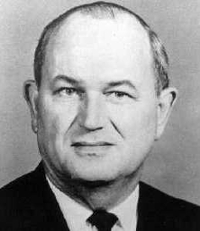 John Kenneth Craver was born in Jonesboro, Illinois, received his B.Ed. in Chemistry and English from Southern Illinois Normal University in 1937, and received his M.S. in Chemistry from Syracuse University in 1938. Immediately, he joined the Monsanto Chemical Company where he specialized in plastics, plasticizers and catalytic hydrogenations. He retired from Monsanto in 1979 after a very successful forty years. Among Mr. Craver's achievements are his invention of an unusual plasticizer, an alkyl diaryl phosphate, which became the standard aircraft hydraulic fluid. This fluid, which Monsanto called Skydrol, dominates the market for all U.S passenger commercial aircraft. Along these lines, he also developed a series of industrial non-flammable hydraulic fluids, called Pydrauls, for use in die castings, furnace door operations, underground coal machinery, and similar applications. Among his many professional activities, Ken Craver was involved in and chaired many committees of the American Chemical Society, the American Association for the Advancement of Science, and, towards the end of his career, founded and chaired activities involved in corporate long range forecasting called "Futures Research". During all these activities he had the distinction of being one of the very few people to chair two Gordon Research Conferences in the same year, 1966. He remained professionally active after his retirement from Monsanto. As part of Craver & Craver, Inc., he formed Futuresearch, continued to manage the Corporate Planners Round Table from 1975 to 1983 and served clients in planning and decision making, largely using his system of cross-impact analysis. He also continued to serve on the Board of the Institute for the Future until he resigned in the early 1990's after 25 years in that position. In 1987 he founded and managed Polytech Laboratories in St. Louis as a complement to Chemir Laboratories. J. Kenneth Craver authored many scientific papers, several books and was the holder of numerous patents.
Ray W. Fuller
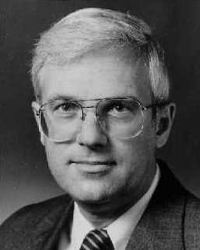 A native of Dongola, Illinois Ray W. Fuller earned his B.A. in Chemistry and M.S. in Microbiology from Southern Illinois University at Carbondale in 1957 and 1958. He earned his Ph.D. from Purdue University in 1961. After receiving his Ph.D., Dr. Fuller spent the next two years at the Ft. Wayne State Hospital, Ft. Wayne, Indiana as Director of the Biochemistry Research Laboratory. He then joined Eli Lilly Research Laboratories where he conducted the research on brain chemistry over a period of sixteen years. This eventually led to the discovery of Prozac, an antidepressant. Prozac was marketed by Eli Lilly in 1988 as the first in a new class of antidepressants, selective serotonin reuptake inhibitors. Prozac had fewer side effects than the tricyclics, and many psychiatrists said the drug revolutionized the treatment of depression. Dr. Fuller also accomplished many other outstanding scientific achievements. He became a Lilly Research Fellow in 1989 and an adjunct professor in neurobiology at The Indiana University School of Medicine in 1985. He received two honorary doctors degrees, one from Purdue University and one from Southern Illinois University. Twice, he received the SIUC Alumni Achievement Award (1984, 1994). Dr. Fuller published over 400 scientific articles and served on the editorial boards of 12 journals.
Bob G. Gower
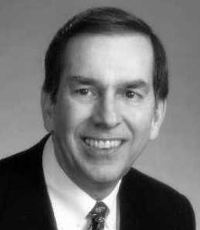 A native of West Frankfort, Illinois, Bob G. Gower received his bachelor's and master's degrees from Southern Illinois University in 1958 and 1960, respectively, and his Ph.D. from the University of Minnesota in 1963. Dr. Gower's illustrious industrial career started at Sinclair Oil Corporation as a research scientist, moved through a number of sales, research, and engineering assignments with Sinclair and then with Atlantic Richfield after their merger in 1969. He became Vice President of ARCO Chemical Company in 1977 and Senior Vice President in 1979. In June 1984, he was elected Senior Vice President of Atlantic Richfield Company. Dr. Gower became President of Lyondell Petrochemical Company when it was formed in April 1985, and was elected Chief Executive Officer in October 1988. He was elected Chairman of the board in August 1994. He is active in educational efforts in the Houston, Texas area, including serving as President of Communities in Schools Houston, a program designed to reduce the dropout rate in public schools. He was head of the 1991-1992 United Way campaign for Houston and the adjacent four-county area. He is a member of the Board of Directors of Baylor College of Medicine, Texas Commerce Bank, Keystone International, American Plastics Council and the Houston Business Council.
Willard W. Harrison
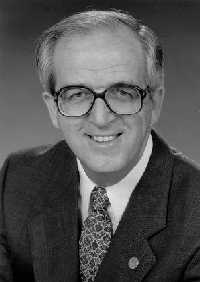 Willard Harrison was born in McLeansboro, Illinois. He received his B.A. and M.S. degrees in Chemistry from Southern Illinois University in 1958 and 1960 and his Ph.D. from the University of Illinois at Champaign-Urbana in 1964, where he held several Fellowships. Dr. Harrison joined the faculty of the University of Virginia as Assistant Professor in 1964, was promoted to Associate Professor in 1969, to Full Professor in 1974, and served as Chemistry Department Chairman, 1978-1981 as well as Associate Provost for Academic Support, 1982-1986. In 1988 he joined the faculty of the University of Florida as Professor of Chemistry and Dean of the College of Liberal Arts & Sciences. He was a Visiting Scientist at the Max-Planck-Institute for Plasmaphysics in Munich, 1975-1976; a Fulbright-Hayes Senior Research Scholar, at the University of Paris, Department of Solid State Physics, 1981; a Visiting Scholar at Stanford University Department of Chemistry, 1982, Department of Geology, 1987-1988; and is a Guest Professor of the SEDC Laboratory of Analytical for Material and Life Process at the Xiamen University in Xiamen China, 1997-2002. He received the Service Recognition Award from the FBI National Academy, 1970-1980, the Distinguished Service Award from the Virginia Section of the American Chemical Society, 1981, the Lester W. Strock Award from the Society for Applied Spectroscopy, 1993, and the Alumni Achievement Award from Southern Illinois University, 1995. Professor Harrison is a member of the Honor Society of Phi Kappa Phi, has published 109 research papers, delivered 92 lectures, and presented 138 contributed papers. Most of his research has been in the area of Mass Spectrometry.
Joseph P. Hoppesch
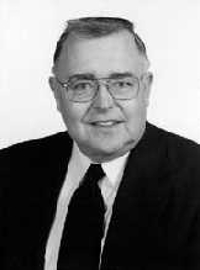 Joseph P. Hoppesch was born in Oak Park, Illinois in 1943. He graduated from SIUC with a B.A. in Chemistry in 1965, and after a brief graduate study in chemistry, migrated to Chicago where he did graduate work in business and taught gas chromatography and mass spectrometry to chemistry graduate students at Loyola and Roosevelt Universities. His industrial career consisted of a twenty-year stint at Borg-Warner Research (1967-87), where he pursued various analytical incentives and rose through the ranks from Chemist to Scientist. Then, after one-year at Waste Management as Manager of the Analytical Laboratory, he moved to Baxter Healthcare, where he has risen from Research Chemist thorough Senior Research Chemist, Manager of the Physical and Chemical Sciences Division, Director of Scientific Affairs, Director of the Center for Physical and Chemical Sciences, and since December 1997, Vice-President for the Center for Physical and Chemical Sciences of the Corporate Research & Technical Services Division. Joseph Hoppesch has several scientific publication and twenty U.S. patents. One of his patents, U.S. 3,877,291 received the IR-100 Award for the development of the first hand-held portable breath analyzer and was specifically recognized by the U.S. Patent Office on Inventor's Day in Arlington, Virginia. Additionally, he has received five awards for innovative technical prowess from Baxter Healthcare, the I.V. Systems Technical Award for "Total Organic Carbon Analysis", and has been recognized by the National University Continuing Education Association. He is a member of the American Chemical Society, AOAC International, American Society of Mass Spectrometry, the M-C-M Mass Spectrometry Discussion Group, Sigma Xi, Analytical Laboratory Managers Association, Research Director's Association of Chicago, and is past-President of the Chicago Chromatography Discussion Group as well as serving on their Governing Board. Joseph P. Hoppesch was the recipient of the 1999 SIUC Alumni Achievement Award.
Duy H. Hua
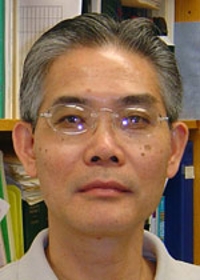 Duy Hua was born in Saigon, Vietnam. He received his Ph.D. from SIU in 1979 under the direction of Dr. Cal Meyers. Originally from Vietnam, Dr. Hua began his studies in Japan at Kyoto University, where he received his undergraduate degree in 1976. Dr. Hua then completed his Ph.D. just 2 years and 11 months after entering the Department of Chemistry & Biochemistry at SIUC. After receiving his doctorate, Dr. Hua carried out postdoctoral research at Harvard University with Dr. E. J. Corey. Dr. Hua began his independent research career as an assistant professor at Kansas State University in 1982, where he has remained ever since. Dr. Hua is an accomplished faculty member and has been recognized for his contributions to research by receiving the Alfred P. Sloan Fellowship, the Research Corporation Research Opportunity Award, the Distinguished Faculty Achievement Award established by Ervin and Margaret Segebrecht for Excellence in Instruction, Research, and Publications from Kansas State University. He has received nearly 50 research grants, has received 4 patents, and has published over 100 papers in professional journals. Hua's research areas include the development of organic molecules for the disruption of amyloid beta-peptide aggregation for treatment and prevention of Alzheimer's disease, new anticancer drugs, endothelin receptor antagonists and release of vasospasm, inhibition of lymphatic cholesterol absorption, and syntheses of beltenes and their nanotubes and chiral phosphine ligands for asymmetric carbon-carbon bond formation.
Carl A. Jennings
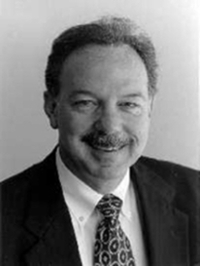 Carl Jennings was born in Equality, Illinois. He earned his B.A. and Ph.D. degrees in Chemistry from Southern Illinois University in 1967 and 1971. After a Post Doctoral Fellowship at The University of Illinois in Champaign-Urbana, Dr. Jennings joined the GAF Corporation in Binghamton, NY, where he held various research and manufacturing positions. He joined BASF Corporation in 1977 as Assistant to the Vice President, Chemicals, in Wyandotte, MI, where he became Plant Manager, Development Chemicals, one year later. In 1980 he was transferred to BASF's site in Geismar, LA as Plant Manager, Agricultural Chemicals. After a short assignment in Germany in 1985, Dr. Jennings was appointed Director of Manufacturing and Technology, Agricultural Chemicals, and moved to BASF's former headquarters in Parsippany, NJ. Two years later he became Group Vice President, Agricultural Chemicals, and in 1989 relocated the Agricultural Chemicals business to Raleigh, NC. In 1991 he returned to New Jersey to serve as Group Vice President, Colorants, in BASF's Coatings and Colorants Division and in 1992 was promoted to Executive Vice President of BASF Corporation and President of its Chemicals Division in Mount Olive, NJ. Dr. Jennings is a member of the American Chemical Society, American Institute of Chemical Engineers, Chemical Manufacturers Association, and the Society of Chemical Industry. He is a member of the Boards of Trustees of St. Elizabeth's College (Morristown, NJ), the Independent College Fund of New Jersey, and the Southern Illinois University Foundation. In 1997 Dr. Jennings received the Alumni Achievement Award from Southern Illinois University.
Ray (Juei) H. Liu
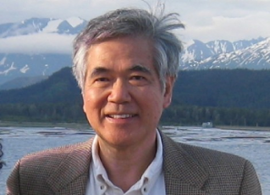 Ray Liu received his Ph.D. degree in Chemistry from Southern Illinois University in 1976. Dr. Liu joined the faculty of the University of Illinois at Chicago as an Assistant Professor in 1977, in 1980 he moved to the Central Regional Laboratory of the EPA in Chicago, and in 1982 to the U.S. Department of Agriculture's Eastern Regional Research Center in Philadelphia as the Center's mass spectrometrist. In 1984, he joined the Department of Justice Sciences at the University of Alabama Birmingham (UAB) as an Associate Professor and was promoted to the rank of Professor in 1989. Currently, at UAB Dr. Liu serves as the Director of the Graduate Program in Forensic Science and the Director of the Interdisciplinary Forensic Science Doctoral Training Program. Dr. Liu's research findings have made very significant contributions in several areas related to workplace drug testing programs. In 2002 he was awarded the Taiwan Department of Health Medal for his contributions to health in Taiwan. He has authored or co-authored four books and more than 100 articles. Professor Liu is a laboratory inspector for the U.S. Department of Health and human Services' National Laboratory Certification Program, serves as scientific consultant for the Taiwanese government on health and justice matters, and is a resource person for the U.S. Coast Guard's drug testing program. Dr Liu is the Editor-in-Chief of Forensic Science Review and serves on the editorial boards of Journal of Analytical Toxicology, Journal of Forensic Sciences, Journal of Food and Drug Analysis, and Encyclopedia of Forensic Sciences, as well as the organizational committees of several national and international professional meetings.
Wendell R. O'Neal
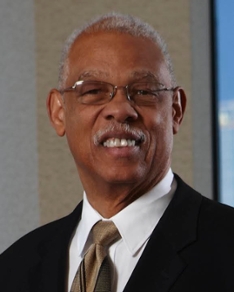
Wendell R. O'Neal, Ph.D., DABCC, FACB is a clinical laboratorian with a diverse background in laboratory administration, government affairs, diagnostics marketing and technical operations. He has held senior management positions in consolidated laboratory systems, hospital laboratories, the diagnostics industry, and a large independent laboratory. Through active involvement in professional societies, government bodies and job assignments, he has been an active participant in developing, interpreting and implementing laboratory policy.
Dr O’Neal is Executive Vice President for Business Operations at PGXL Laboratories, a laboratory engaged in facilitating personalized medicine. He did his B.A. in Chemistry at Southern Illinois University, and received a M.S. in Clinical Chemistry from the Department of Biochemistry and Biophysics of the University of Rochester. Following two years at NIH, he earned a Ph.D. in Clinical Chemistry from Loyola University of Chicago in 1974. He spent four years as a hospital based clinical chemist while holding a faculty appointment at the University of Connecticut Health Center. After spending 14 years with Dupont Medical Products, he joined SmithKline Beecham Clinical Laboratories as Technical Director of the Philadelphia Laboratory, and later served that company as Director, Technical Communications and Regulatory Affairs. During the spring semester of 1996, he served as Special Consultant to the Provost at Temple University. While he served as Vice President, Alliance Laboratory Services (ALS), Cincinnati, OH, that laboratory became the largest hospital based consolidated laboratory system in the country. Following the sale of ALS to LabOne, he was Executive VP of LabOne’s Ohio subsidiary, and then Sr. VP, Corporate Relations for the parent company. In his consulting practice, The WHISK Group, he advises and assists hospital systems and laboratories on strategy, structure and efficiency.
Daniel Ostgard
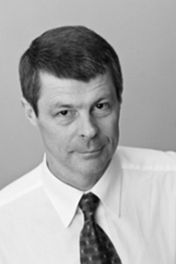 Daniel J. Ostgard received a doctorate degree in 1987 from József Attila Tudományegyetem (József Attila Science University) in Szeged, Hungary under the supervision of Professor Miháy Bartók. This was followed by a Ph.D. at Southern Illinois University at Carbondale with Professor Gerard V. Smith, where he was awarded the Sigma Xi Rose and Essie Padgett Scholarship for student research. He then performed his post doctoral studies with Professor Wolfgang M. H. Sachtler at Northwestern University in Evanston, Illinois. Dr. Ostgard joined the catalyst group of Degussa Corporation in 1991, where he developed precious metal powder and fixed bed catalysts for industrial applications initially in New Jersey and later on in Kentucky. In 1998 he transferred to Degussa AG (currently known as Evonik Industries) in Hanau, Germany where he took over the global R&D group for the activated base metal catalysts (Ni, Co and Cu catalysts à la Murray Raney) and these responsibilities eventually were expanded to include precious metal powder catalysts. He then worked 10 years in the area of technical business development for new catalyst technologies in North America, South America and Asia. He is now working with the newly acquired Evonik Catalysts India since 2015 as the senior global applied technology manager for hydrogenation and isomerization catalysts used in the fats and oils industries. In 2008 he was bestowed the Raney Award at the 22nd Organic Reactions Catalysis Society (ORCS) conference in Richmond, Virginia for the development and commercialization of base metal catalysts and has since 2012 served as the Non-North American director on the ORCS board. Dr. Ostgard has authored 50 awarded patents, 43 publications and more than 70 presentations at international scientific conferences.
Marcin M. Majda
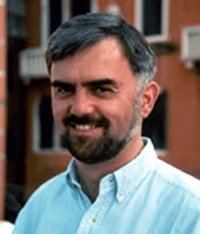
Marcin Majda was born in Warsaw, Poland in 1951 and received his M. Sc. Degree in Chemistry from Warsaw University in 1974. He joined the graduate program in Chemistry at SIUC in 1976 and received his Ph.D. degree in 1980. After a postdoctoral appointment at the University of Illinois, 1980-1982, he joined the faculty of the Chemistry Department at the University of California, Berkeley in 1982 moving up the ranks to Associate Professor in 1988 and Full Professor in 1996. In 2001 he became Department of Chemistry Vice-Chair for the physical chemistry graduate program. He is also an Associate Faculty Scientist in the Materials Sciences Division of the Lawrence Berkeley National Laboratory. He is a member of the Editorial Board of the Journal of Solid State Electrochemistry and recently completed a 5-year term on the Board of Directors of the Society for Electroanalytical Chemistry. His primary research interests are in interfacial phenomena and electrochemistry with specific reference to the dynamical properties of molecular assemblies at air/water and electrode/solution interfaces. His pioneering studies of nanoscale templates (aluminum oxide) on electrode surfaces in the 1980's has contributed significantly to current work on nanochemistry. His research makes extensive use of surface modification, using Langmuir-Blodgett transfers and self-assembly to study the kinetics of long-range electron transfer in an attempt to understand the nature of electron transfer in proteins. His studies of monolayer assemblies at the air/water interface have made fundamental contributions to the understanding of phospholipid bilayers and membrane processes.
William R. Norwood
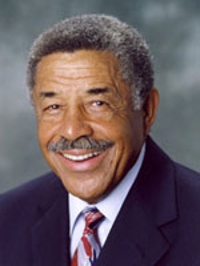 A native of Centralia, Illinois, William R. Norwood received his bachelor's degree from Southern Illinois University in 1959 and an MBA degree in International Relations from the University of Chicago. While at SIU he was a three-year starter as SIU's first African American quarterback and has been inducted into the Saluki Hall of Fame. Norwood was also a member of the ROTC while at SIU and has been inducted into the SIUC ROTC Hall of Fame. After graduation he served as a pilot in Strategic Air Command from 1959 to 1965. He then began a 31-year career with United Airlines, the first African-American pilot hired by United, and the first to achieve the rank of captain. When he retired from United Airlines in 1996 his name was painted on the side of a United Airlines aircraft (a B-727) which is part of the "Take Flight" exhibit in Chicago's Museum of Science and Industry. He is also included in "Black Wings", a permanent exhibit at the Smithsonian Institution National Air and Space Museum. In 2007 Norwood was inducted into the Illinois Aviation Hall of Fame. He is the recipient of numerous awards for his contributions to his profession, to education, and to the community. Norwood was a member of the SIU Board of Trustees from 1974-2001 including a period as chair of that Board. He is a recipient of the University's Distinguished Alumni Award and the College of Science Alumni Achievement Award. He and his wife, Molly, are life members of the SIU Alumni Association and of the NAACP and have established scholarships for SIUC students. In 2008 he was inducted into the Lincoln Academy of Illinois.
Janusz B. Pawliszyn
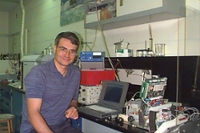 Janusz B. Pawliszyn received his early education in Poland. He earned his B.Sc. in Engineering at the Technical University of Gdansk in 1977, his M.S. in organic chemistry at the same university in 1978, and his Ph.D. in analytical chemistry at Southern Illinois University in Carbondale in 1982. Then he spent two years as a Postdoctoral Fellow at the University of Toronto, Canada, and joined the faculty at Utah State University as an Assistant Professor. In 1988 he moved to The University of Waterloo, Waterloo, Ontario where he moved up the ranks to Associate Professor in 1991 and Professor in 1997. Professor Pawliszyn is an author of over 150 scientific publications and has recently published a book on Solid Phase Microextraction. He has graduated numerous M.S. and Ph.D. students as well as hosting many visiting scholars. He has served as a member of the Editorial Boards of Analytical Chemistry, Analyst, Canadian Journal of Chemistry, Electrophoresis, Journal of Microcolumn Separations, and Field Analytical Chemistry and Technology. He received the 1995 McBryde Medal, the 1996 Tswett Medal, the 1996 Hyphenated Techniques in Chromatography Award, the 1996 Caledon Award, the 1998 Jubilee Medal from the Chromatographic Society, U.K., and the 2000 Maxxam Award (CSC). Professor Pawliszyn has held Visiting Professorships to the University of Campinas, Campinas, Brazil, to the Centre for environmental Research, Leipzig, Germany, and to Toyohashi University of Technology sponsored by the Research Foundation for the Electrotechnology of Chubu. Professor Janusz B. Pawliszyn is the recipient of the Southern Illinois University College of Science Alumni Achievement Award for 2000.
Leslie B. Sims
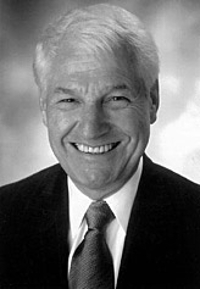 Leslie B. Sims received his B.A. with Honors from Southern Illinois University in Carbondale in 1958. He then went to the University of Illinois in Champaign/Urbana and earned his M.S. degree in 1961 and Ph.D. in 1967. Upon completion of his Ph.D., he became an Assistant Professor in the Department of Chemistry at the University of Arkansas in Fayetteville in 1967. At Arkansas he rose through the ranks to Associate Professor in 1970, Professor in 1975, and Chair in 1979. In 1983 he accepted an appointment as Professor and Associate Dean of Research at North Carolina State University. There he moved up the administrative ranks and became Acting Dean of the physical and Mathematical Sciences, 1988-1989, and then Associate Vice Chancellor for Research, 1989-1991. Seeing other opportunities, he moved to the University of Iowa where he accepted an appointment as Professor of Chemistry and Dean of the Graduate School. In 1997 he became Associate Provost for Graduate Education and in 2000, Vice Provost. Professor Sims has been a Visiting Scientist Fellow, 1974 and 1997, in the Scientific Research Council of Great Britain and a Faculty Affiliate of Mount Marty College in Yankton, South Dakota, 1976-1977 and 1982-1983. He is a member of Phi Lambda Upsilon, Sigma Xi, Phi Eta Sigma, Phi Kappa Phi, and Pi Mu Epsilon. He has served on the National Science Foundation Advisory Committee on Minority Programs, 1995-1998; served on the National Association of State Universities and Land-Grant Colleges Council on Research Policy and Graduate Education's Executive committee, 1994-1996, and chair, 1994-1995; served on the Users Services Committee of the Graduate Record Examination, 1994-1997; and was President of the University of Arkansas chapter of Sigma Xi, 1978-1979. His research has encompassed the dynamics of chemical reactions, kinetic isotope effects, gas phase kinetics, unimolecular reactions, and molecular vibrations. He has held grants from the U.S. Department of Education, the North Carolina Biotechnology Center, and the National Science Foundation.
Anamai Singhabhandhu
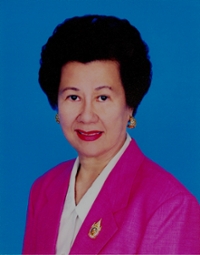 Anamai Singhabhandhu received her doctoral degree in chemistry in 1974 from Southern Illinois University Carbondale. Upon returning to Thailand she carried out research on the reduction of industrial pollutants for the Department of Science in the Ministry of Industry. Her accomplishments earned her an appointment as the first Chief of the Pollution Analyses and Research sub-division. She later became Director of the Analytical Chemistry Training division. Dr Singhabhandhu later held the positions of Chief of the Metrology Development program and Director of the Physics and Engineering division in the Ministry of Industry. She was Deputy Director General in the Department of Science Service during discussions which led to the National Metrological Development Act, approved by the Royal Thai government, for the establishment of the National Institute of Metrology. Dr Singhabhandhu also served as Director of the Technical and Public Relations division and as General Inspector and Deputy Permanent Secretary of the Ministry of Science, Technology and Environment. Other government appointments include Ministry Spokesperson, Secretary and Chairman of the Joint Committee and of the Working Group on Public Sector Reform. She has also served as Chairman of the Association of Southeast Asian Nations Committee on Science and Technology (ASEAN-COST). Recently she was appointed to the government sub-committee for the evaluation of public sector inspection. In 2007 Dr Singhabhandhu was recognized as a Distinguished Alumni of Southern Illinois University Carbondale.
Curtis W. Smith
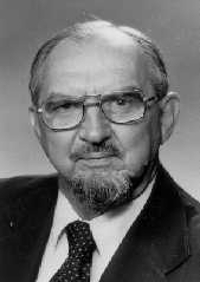 Curtis W. Smith was born in Omaha, Illinois, January 14, 1918. He earned his B.Ed. degree from Southern Illinois Normal University in 1940 where he worked his way through school by doing odd jobs around campus. After SINU he went on to the University of Illinois in Urbana-Champaign to earn his Ph.D. in organic chemistry in 1943. Immediately after receiving his Ph.D., Dr. Smith started work with Shell Development Company in their Industrial Chemicals Division. In 1952 he was promoted to a member of staff management and in 1965 he became the Manager of Research and Development of the Industrial Chemicals Division. In 1971 he became the Assistant to the President of Shell Chemical Company, and in 1977 Dr. Smith became a Senior Consultant involved in Chemical Industrial Regulations for Shell. Finally, he retired in 1983, but continued to be involved with Shell when asked to review their worldwide patent policy. During his 40 years at Shell, he synthesized the first fused thiazolidine-beta-lactam, which helped elucidate the structure of pennicilin; developed a synthesis of tryptophan using quarternary ammonium alkylation; developed the synthesis of straight chain alpha-olefins and the biodegradable alcohols derived from them, which led to the development of biodegradable detergents worldwide; and developed new chemistry and new uses for acrolein. Dr Smith holds 75 patents in the US and other countries and has published 20 research papers and one book. In 1966 he was awarded the Alumni Achievement Award by Southern Illinois University. Dr Smith is a member of Sigma Xi and the American Chemical Society.
Ralph B. Thompson
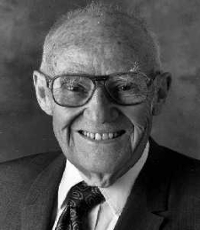 Ralph B. Thompson was born in Thompson Woods and grew up in one of two houses (now depressions in the ground) located along the path just west of the south end of the SIUC Student Center. He is a descendant of a prominent Carbondale founding family. His grandfather, Col. Joshua Thompson came to the area in 1852 and settled in Union County. His father, Theodore W. Thompson, moved to the outskirts of Carbondale in 1887 in the area now known as Thompson Woods. Ralph Thompson attended Southern Illinois Normal University and earned his B.Ed. degree in Chemistry in 1934. His A.M. and Ph.D. degrees were earned at Harvard University in 1936 and 1938 under the direction of the well known educator/scientist, James Conant. Dr. Thompson was very successful in the field of industrial chemistry, holding 140 patents. He spent over 20 years with Universal Oil Products, where he worked in the petroleum industry, and when he retired, he was Manager of Division Research of Nalco Chemical Company, where he worked in the area of water treatment. He received the SIU Alumni Achievement Award for Professional Achievement in 1963 and twice was the guest of honor of the Latin American Chemical Congress.
Charles G. Wade
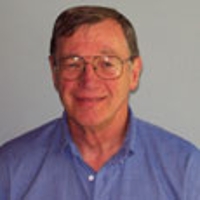 Charles G. Wade graduated from SIUC with a B.A. in Chemistry in 1960. After receiving his Ph.D. in 1965 from MIT, he did postdoctoral work at the University of Chicago for three years. Since 1967 he spent the next 13 years on the chemistry faculty of the University of Texas, Austin where his research included NMR dynamics of liquid crystals, diffusion in biological membranes, and optical studies of carcinogenesis in cells. In 1976-1977 he spent a sabbatical year at UC Berkeley with Mel Klein and Melvin Calvin. During his academic career, Charles Wade obtained grants of approximately one million dollars from NIH, NSF, American Cancer Society, and private foundations. His industrial career consists of a 22-year stint at IBM (1980- current), where he continued his research in NMR and held various managerial positions including the current position as the Manager of Materials Analysis and Characterization of the IBM Almaden Research Center. His activities have resulted in 75 research publications and two books. Charles Wade also maintains an active involvement in education. He is the IBM co-director (with Stanford and UC Davis) of an NSF Materials Research Science and Engineering Center (Center for Polymer Interfaces and Macromolecular Assemblies-CPIMA) which brings not only postdoctorals but also summer undergraduates and high school teachers for research experiences at IBM Almaden. He is also the co-director of another academic industrial partnership, an NSF GOALI grant with San Jose State University (Surface and Analytical Chemistry of Materials). Charles Wade also serves on various committees such as on the Materials Technology Center Board at SIUC and on NSF panels for grants and various programs.
Jack E. Wallace
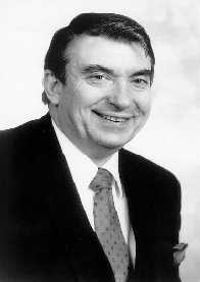 Jack Wallace was born in Harrisburg, Illinois. He earned his B.A. and M.A. degrees in Chemistry from Southern Illinois University in 1955 and 1957. He earned his Ph.D. in Biochemistry and Microbiology from Purdue University in 1962. Upon graduation, he entered the Air Force and spent three years on active duty and eleven years in the reserves. He served in a medical group as a Lieutenant Colonel, worked in civil service for eight years, serving at Lackland and Brooks AFB, and left the Air Force as Chief of Forensic Toxicology after establishing the Air Force Drug Abuse Testing Laboratory, which is still operating at Brooks. In 1970 he joined the Department of Pathology of the University of Texas Health Science Center at San Antonio where he was promoted to Associate Professor in 1974 and Professor in 1979. Professor Wallace served on the Editorial Boards of the Journal of Forensic Sciences, the Journal of Analytical Toxicology, and the Journal of Substance and Alcohol Actions/Misuse. He was a Founding Director and Diplomate of The American Board of Forensic Toxicology and was a Fellow of the National Academy of Clinical Biochemistry, the American Academy of Clinical Toxicology, the American Academy of Forensic Sciences, Sigma Xi Honorary Research Society, International Association of Forensic Toxicologists, and the American Institute of Chemists. He was a member of the America Chemical Society, Phi Lambda Upsilon Honorary Chemical Society, American Association for Clinical Chemistry, and a counselor of the Southwestern Association of Toxicologists. He authored over 120 papers in refereed journals, several chapters in books and one patent. Much of this work was in the development and applications of methods of chemical analysis for the detection, identification and quantitation of drugs, and/or drug metabolites in biofluids and tissues.
John Wettaw
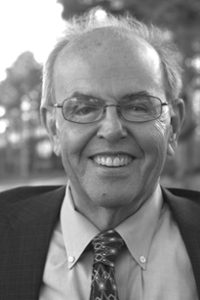 John Wettaw attended the public schools in Eldorado and then graduated from Southern Illinois University Carbondale with a B.A. in chemistry in 1961. He obtained his Ph.D. in physical chemistry in 1967 from Michigan State University, working in the laboratory of Dr. Leslie Sims. He then began as a faculty member at Northern Arizona University where he continues to teach. In 1972 he was elected to the Arizona legislature where he served in both the House of Representatives (20 years) and Senate( 8 years) retiring at the end of 2000 holding the record as the longest serving Republican state legislator in Arizona history. As such he was very active in all facets of legislation, most notably his active support for all levels of education from primary through doctoral research. His service included a number of chairmanships of committees as well as Speaker Pro-Tem of the House and President Pro-Tem of the Senate. He continued to teach at NAU while serving as a legislator. He was honored with many awards including: Arizona Education Assoc. Apple Award; Arizona Students Assoc. Legislator of the Year; Legislator of the Year – Arizona Retarded Citizens Assoc.; Mohave County Community College Distinguished Service Award; CRYSS Man of the Year; Arizona Assoc. of Chicanos for Higher Education. He also holds honorary licenses in Pharmacy, Radiological Technology and Athletic Training. Dr. Wettaw was named Science Teacher of the year at NAU in 1999, became Chair of Chemistry and Biochemistry from 2002-2004, and homecoming dedicatee in 2002. The new Biochemistry building was dedicated to him in 2001. He was awarded an honorary doctorate by NAU in 2008 for his service to education and service to the people of Arizona.
Steven Zullo
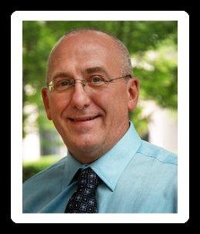 In July of 2011, Dr. Zullo joined the team at NIBIB as a Program Director in charge of the Drug and Gene Delivery Portfolio for the Division of Discovery Sciences and Technology. He also represents NIBIB on the Nanoscale Science, Engineering, and Technology (NSET) Subcommittee of the National Nanotechnology Initiative (NNI). Early in his career, after a postdoctoral fellowship at Yale School of Medicine, Dr. Zullo joined the Laboratory of Biochemical Genetics at National Institute of Mental Health in 1991, where he created the first mammalian (Chinese Hamster Ovary) cell line with a functional mitochondrial DNA-encoded gene stably integrated into the nuclear genome (termed allotopic expression). Dr. Zullo also assembled an intramural/extramural team that first demonstrated protease inhibitors (PIs) designed to block the HIV protease could also block the mitochondrial processing protease. This mechanism might contribute to the lipodystrophy syndromes that first surfaced when PIs were combined with nucleoside analogues (which also affect mitochondria) in highly active antiretroviral therapy (HAART). In 1997, Dr. Zullo spearheaded formation of the NIH Mitochondria Interest Group, which he continues to lead today. At the end of 2000, he took an opportunity to manage chemistry and life sciences projects for the Advanced Technology Program at the National Institute of Standards and Technology, until 2004. He returned to the NIH to become the Scientific Review Officer (SRO) for Gene & Drug Delivery Systems at the Center of Scientific Review. In May 2009 he became SRO for Biomaterials and Biointerfaces, until he began his current position at NIBIB. Zullo, an Eagle Scout, entered SIU-C as a SIU-C President’s Scholar in fall 1972 from Bradley-Bourbonnais Combined High School in Bradley, IL. He received his BS from the Zoology Dept. in 1976, and his MA in Zoology in 1982, concentrating on Limnology and aquatic entomology. Zullo then joined the Dept of Chemistry and Biochemistry and Herb Hadler’s lab in 1983 to work on his PhD in Chemistry and Biochemistry. Zullo married Carver McCown of Chestertown, MD in 1992 and they have 4 girls and 2 boys. He is a life member of the SIU-C Alumni Association, and the Alpha Phi Omega service fraternity.
James E. House
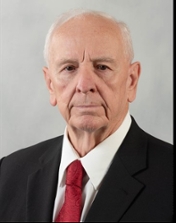 James E. House A native of Southern Illinois, James E. House grew up in an area now covered by Rend Lake. He graduated from a one-room elementary school in that area and after graduating from Benton Consolidated High School, he enrolled at SIU where in due course he earned B.S. and M. A. degrees. Professor John C. Bailar, Jr. was his Ph.D. adviser at the University of Illinois as he was for others included in this Hall of Fame roster. Following a circuitous path that led from Western Kentucky University to the A. E. Staley Mfg. Co. in Decatur, IL, he joined the faculty at Illinois State University in the spring of 1966 as Assistant Professor and became Professor in 1974. In the interim, he held positions of Assistant Dean of Faculties and Associate Dean of the University and was a NSF Science Faculty Fellow in 1969-1970. At ISU, House taught a wide variety of courses that included general chemistry at all levels, undergraduate and graduate level courses in both inorganic and physical chemistry as well as special topics courses. Over the years, he served as consultant to Tate & Lyle Company and performed kinetic modeling of the process that led to the successful production of the sweetener Splenda®. Long active in the Illinois State Academy of Science, he served as the President of the academy in 1974-1975, Editor of the Transactions of the ISAS from 1975-1979, and he was elected a Fellow of the Academy in 1984. Over 150 publications in refereed journals resulted from his research and writing. House began a serious and more dedicated writing career following retirement from ISU, which resulted in books on chemical kinetics, quantum mechanics, and inorganic chemistry all of which have appeared in multiple editions. He has also served almost continuously since 1998 as Adjunct Professor of Chemistry and more recently as Scholar in Residence at Illinois Wesleyan University. His writing on sporting topics has led to approximately 400 publications in periodicals and four books. One of those books and Descriptive Inorganic Chemistry were coauthored with his wife, Kathleen who is also an adjunct professor at IWU. In 2011, House was elected Student Body Professor of the Year by the student body at Illinois Wesleyan University. A new direction was started in 2016 when House was appointed Series Editor for a new series of reference volumes, Developments in Physical & Theoretical Chemistry that is being published by Elsevier. He is also actively revising Inorganic Chemistry in preparation of the third edition and is the Series Editor for the "Chemistry by Invitation" section of The Chemical Educator.
Robert P. Hanzlik
 Robert P. Hanzlik was born in a working-class neighborhood of Chicago in 1943. He attended local schools, graduating from Harrison Technical High School in 1961. He went on to Southern Illinois University at Carbondale where he double majored in Chemistry and Zoology. After graduating with Honors in 1966, he received an NSF Graduate Fellowship and went to Stanford University to study organic chemistry and enzyme mechanisms under the direction of Professors Eugene E. van Tamelen and Raymond B. Clayton, working on the then-hot topic of enzyme-mediated cyclization of squalene epoxide to lanosterol. After receiving his Ph.D. in 1970, he joined the group of Professor Jack Lewis at Cambridge University as a NATO-NSF postdoctoral fellow where he studied biomimetic oxygenase models. Upon returning to the US in 1971 he joined the faculty of the Department of Medicinal Chemistry at the University of Kansas. He loved teaching pharmacy students and working in the lab with his graduate students and postdocs. During his 49 year career at KU Hanzlik published more than 170 research papers and trained more than 50 graduate students and postdoctoral fellows.
Dr. Hanzlik and his group studied cytochrome P450 reaction mechanisms and the formation and disposition of chemically reactive metabolites. They employed a range of experimental methods including substituent effects, kinetic isotope effects, mass spectrometry, proteomics and bioinformatics. Their focus included identifying reactive metabolites, understanding their binding to tissue proteins, and correlating these interactions with cytotoxicity and organ damage. They published extensively on these topics and made significant contributions to the field. His successful grant applications to NIH enabled KU to build the University Mass Spectrometry Laboratory in 1978, and then later, the Center of Biomedical Research Excellence in Protein Structure and Function (COBRE-PSF), which he directed from 2002 until 2019. He retired in 2020.
Dr. Hanzlik was elected to Fellowship in the American Association for Advancement of Science in 1994 and honored with many awards, including the Sato Memorial International Award from the Foundation for Education in Science and the Pharmaceutical Society of Japan and the Taito O. Soine Award in Medicinal Chemistry. He held national elective offices in the Society of Toxicology, the American Association for the Advancement of Science, and the International Society for the Study of Xenobiotics.